
Why Dog Enrichment Activities Matter More Than Extra Playtime
Dog enrichment activities for daycare play a critical role in keeping dogs mentally stimulated, emotionally balanced, and behaviorally healthy. While physical exercise is important, research consistently shows that mental stimulation through enrichment is essential for reducing stress, anxiety, and boredom in dogs.
In many cases, behavior challenges don’t begin with disobedience. Instead, they start when dogs lack meaningful engagement throughout the day. As a result, even dogs who receive plenty of physical play can still appear restless, anxious, or destructive once they return home.
For this reason, enrichment focuses on the brain rather than just the body. By engaging a dog’s natural instincts—such as sniffing, licking, and problem-solving—dogs experience deeper fulfillment and improved emotional regulation.
Why Dog Enrichment Activities for Daycare Matter
Enrichment is not a trend or a buzzword. Rather, it is a well-established principle in animal behavior science and is widely used in veterinary medicine, working dog programs, and zoological care.
According to research published in Applied Animal Behaviour Science, dogs that regularly participate in enrichment activities show lower cortisol levels, which directly correlates with reduced stress. Additionally, these dogs demonstrate fewer anxiety-related behaviors and improved adaptability to new environments.
Over time, this mental engagement leads to calmer behavior, increased confidence, and better coping skills. Consequently, dogs who receive consistent enrichment tend to thrive both in daycare settings and at home.
Why Enrichment Works When Exercise Alone Falls Short
Although physical exercise plays an important role in a dog’s overall health, it does not fully address cognitive needs. In fact, many high-energy dogs can remain unsettled even after long walks or extended play sessions.
By contrast, enrichment targets cognitive fatigue. Because the brain consumes more energy than muscles, activities that require thinking, problem-solving, and sensory processing can be incredibly effective in a short period of time.
As a result, just ten minutes of structured mental stimulation can often provide more balance than forty-five minutes of unstructured play. This is precisely why dog enrichment activities for daycare are so impactful when done intentionally.
Licking, Sniffing, and Searching Are Biological Needs
To begin with, licking-based enrichment—such as peanut butter lick mats—activates the parasympathetic nervous system. This system is responsible for calming responses in the body, including a lowered heart rate and reduced stress signals. Because of this, licking is commonly recommended by veterinarians to help dogs self-soothe.
Similarly, sniffing engages a dog’s most powerful sense. Since dogs experience the world primarily through scent, scavenger hunts and scent-based activities help reduce frustration while increasing focus and confidence.
Meanwhile, search-based enrichment allows dogs to problem-solve independently. As a result, dogs feel accomplished rather than overstimulated, which supports healthier emotional regulation and behavior.
Why Structured Enrichment Beats “Just Letting Dogs Play”
More activity does not always mean better outcomes. Without structure, constant stimulation can actually increase anxiety or lead to overstimulation in some dogs.
At Tenaker, dog enrichment activities for daycare are intentionally designed and rotated. Activities are monitored for engagement rather than participation alone, and dogs are given opportunities to rest and reset throughout the day.
Rather than aiming for exhaustion, the goal is fulfillment. When dogs leave daycare mentally satisfied, they are far more likely to relax, settle, and behave calmly at home.
How Enrichment Impacts Behavior at Home
When dogs receive consistent mental stimulation during daycare, many owners notice significant improvements at home. For example, dogs often sleep better, show fewer destructive behaviors, and settle more easily in the evenings.
In addition, enriched dogs tend to display improved social skills and reduced anxiety. This isn’t coincidental—it’s the result of neurological regulation and balanced stimulation.
Why January Is the Perfect Time to Prioritize Enrichment
During winter months, outdoor exercise and exploration are often limited. However, dogs’ mental and emotional needs do not pause just because it’s cold outside.
For this reason, enrichment becomes especially important in January. By intentionally focusing on mental stimulation, dogs remain engaged, confident, and balanced despite seasonal limitations.
This is why our January activities calendar is packed with enrichment experiences designed to keep dogs active, curious, and fulfilled throughout the winter.
What You’ll See at Tenaker This Month
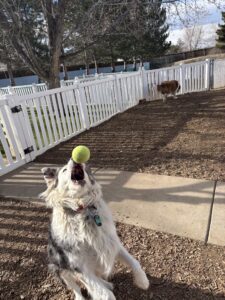
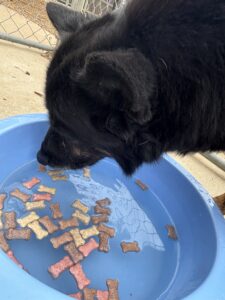
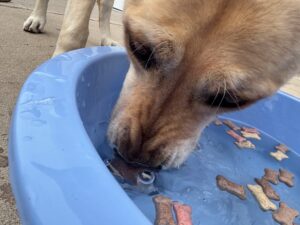
Throughout January, dogs in our daycare enjoy a variety of enrichment activities, including peanut butter lick mats, bacon and maple–flavored bubbles, turkey scavenger hunts in the play yard, and rotating sensory and puzzle-based games.
These experiences are carefully planned to stimulate the brain while supporting emotional well-being. When paired with structured play and rest, enrichment becomes one of the most powerful tools we have for supporting healthy dog behavior.
The Bottom Line
A tired dog is good.
A fulfilled dog is better.
Dog enrichment activities for daycare are not optional extras—they are essential to a dog’s mental and behavioral health. When you stimulate the brain, the behavior follows.
That’s how dogs thrive.